
©2021 - 2022
MIXITI*
MIXITI
Timeline
2021 - 2022
Team
Co-work with UCL RC9: Xu Zhang, Xiuyun Hu, Jill Lee
My Role
UIUX Design, AI Training, User Journey, 3D Module Design, Animation & Rendering
About
Remix the City: XR + AI Urban Design Platform
MIXITI — short for "remix the city" — is an XR Architecture and Cityscape Design Platform that bridges the physical and virtual worlds, enabling anyone to immerse themselves in and co-create the spaces around them.
Design Challenge
How might XR and AI turn passive city dwellers into active co-creators of urban space?
Research Goals
MIXITI explores three questions at the intersection of XR, AI, and urban experience:
Authorship
Can non-designers meaningfully participate in shaping the spaces around them?
Immersion
How do layered virtual environments change our perception of and relationship with physical space?
Co-creation
What does collaborative, real-time spatial design look like in an XR context?
Inspriation
When Sci-Fi Becomes Blueprint
In previous research, we're greatly inspired by serval movies and drama series in design process. The futuristic city pictured in both the Blade Runner and Altered Carbon, along with characters' interaction with virtual technology. How MR technology became embedded to people's daily lives is mesmerizing.
Platform Framework
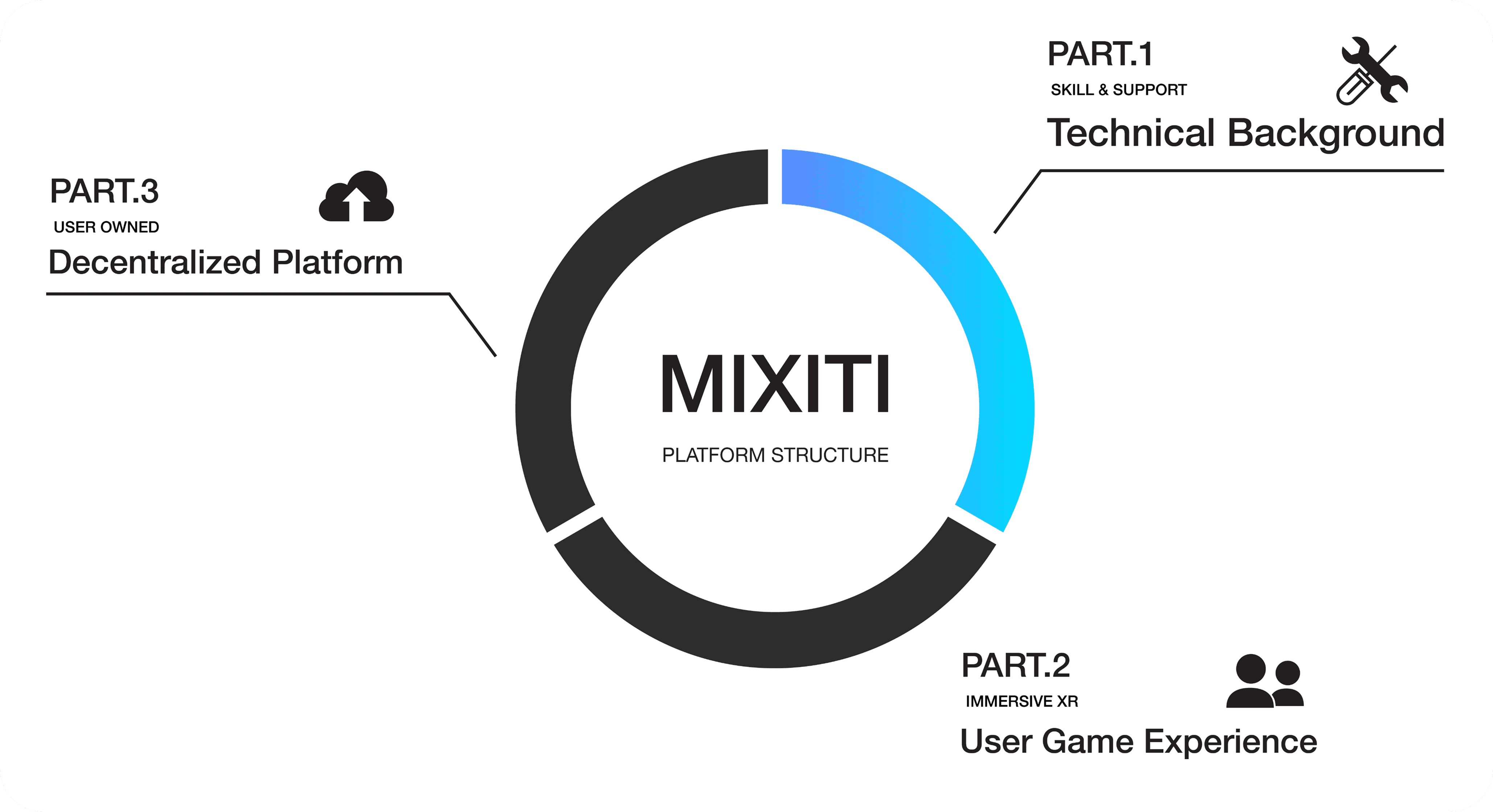
The Framework: Where Tech Meets Creativity
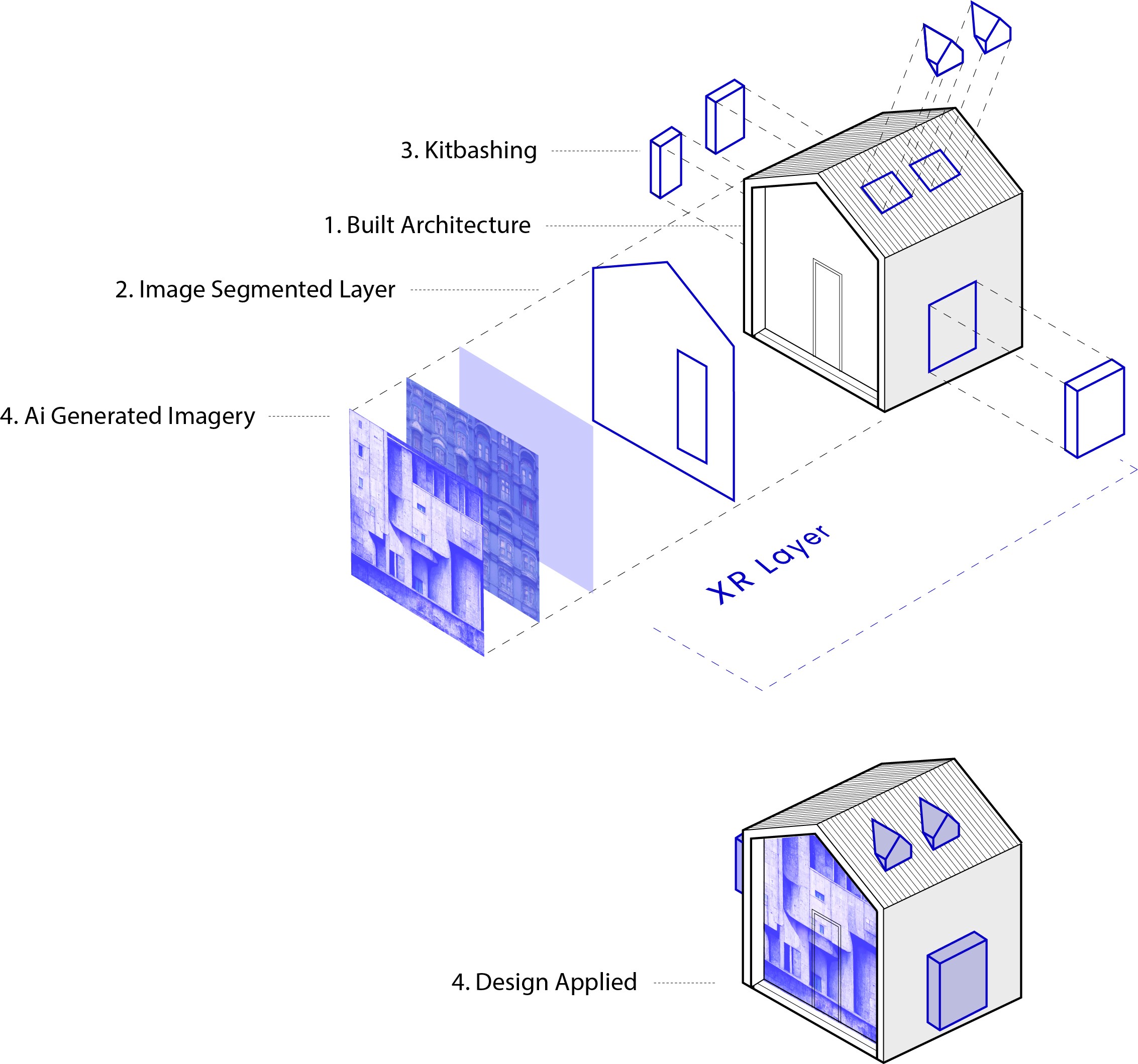
Three pillars: AI generates façades from prompts. Kitbashing lets you remix pre-made 3D modules. A decentralized library keeps the asset ecosystem community-powered.
Usability
From Idea to Reality — No Experience Needed.
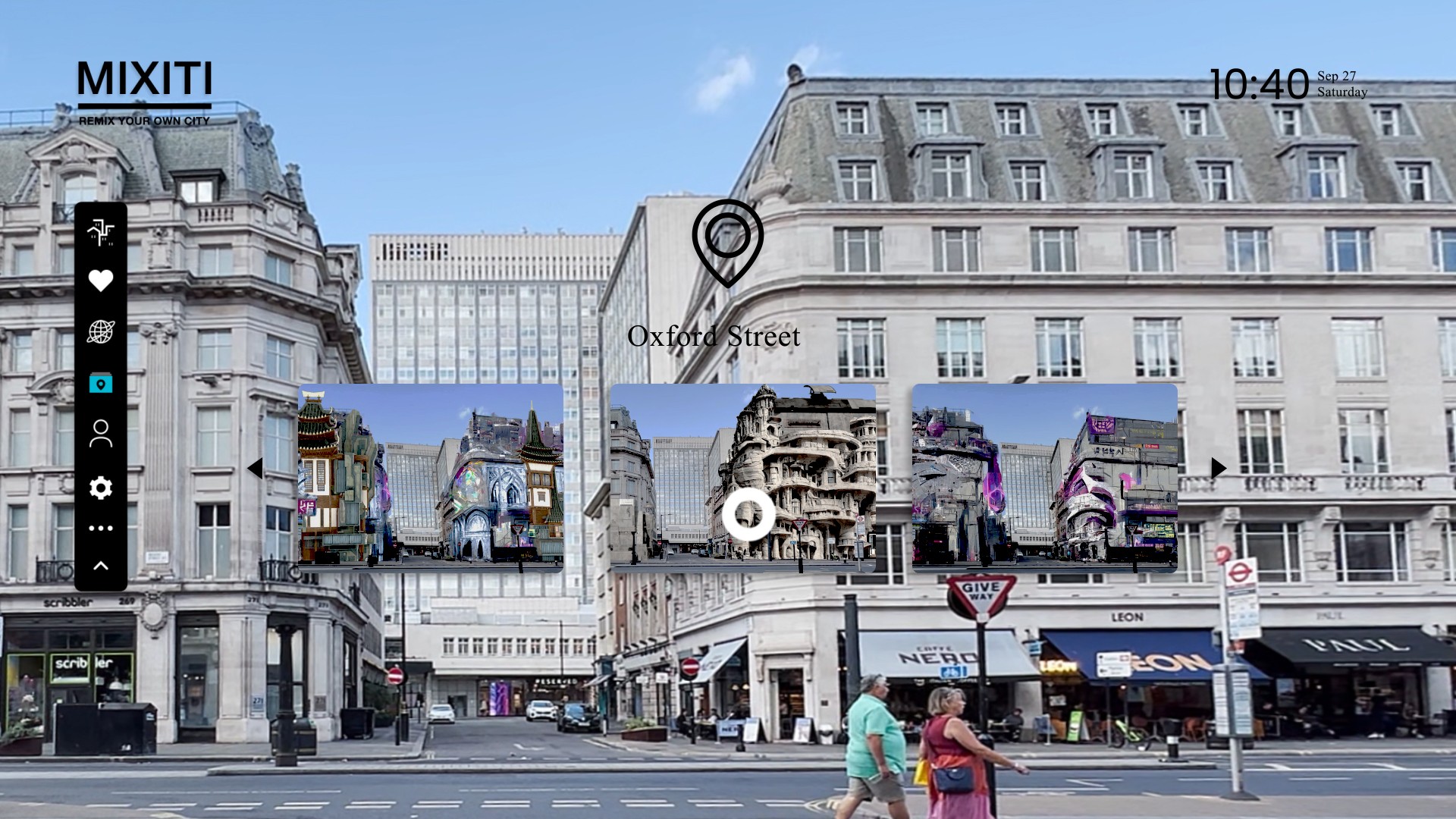
Explore — Browse AI-generated templates
Experiment — Tweak designs with gesture controls
Build — Assemble urban spaces in minutes
Design System
Design Approach
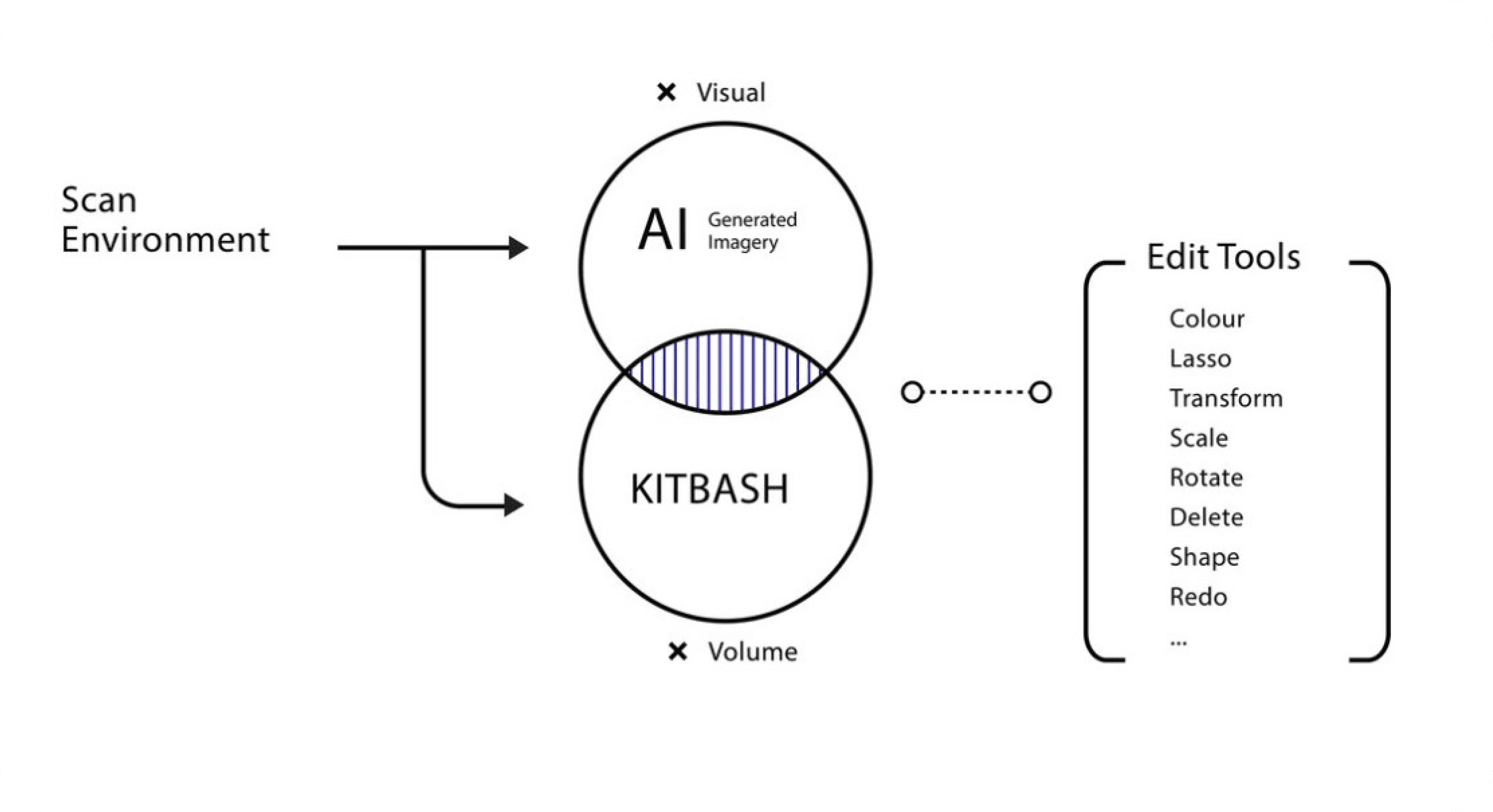
Three modes, one creative flow
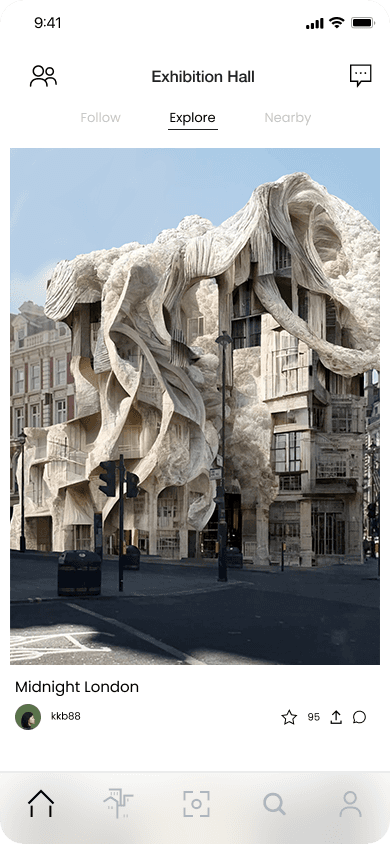
AI-Generated — describe a space, AI renders it
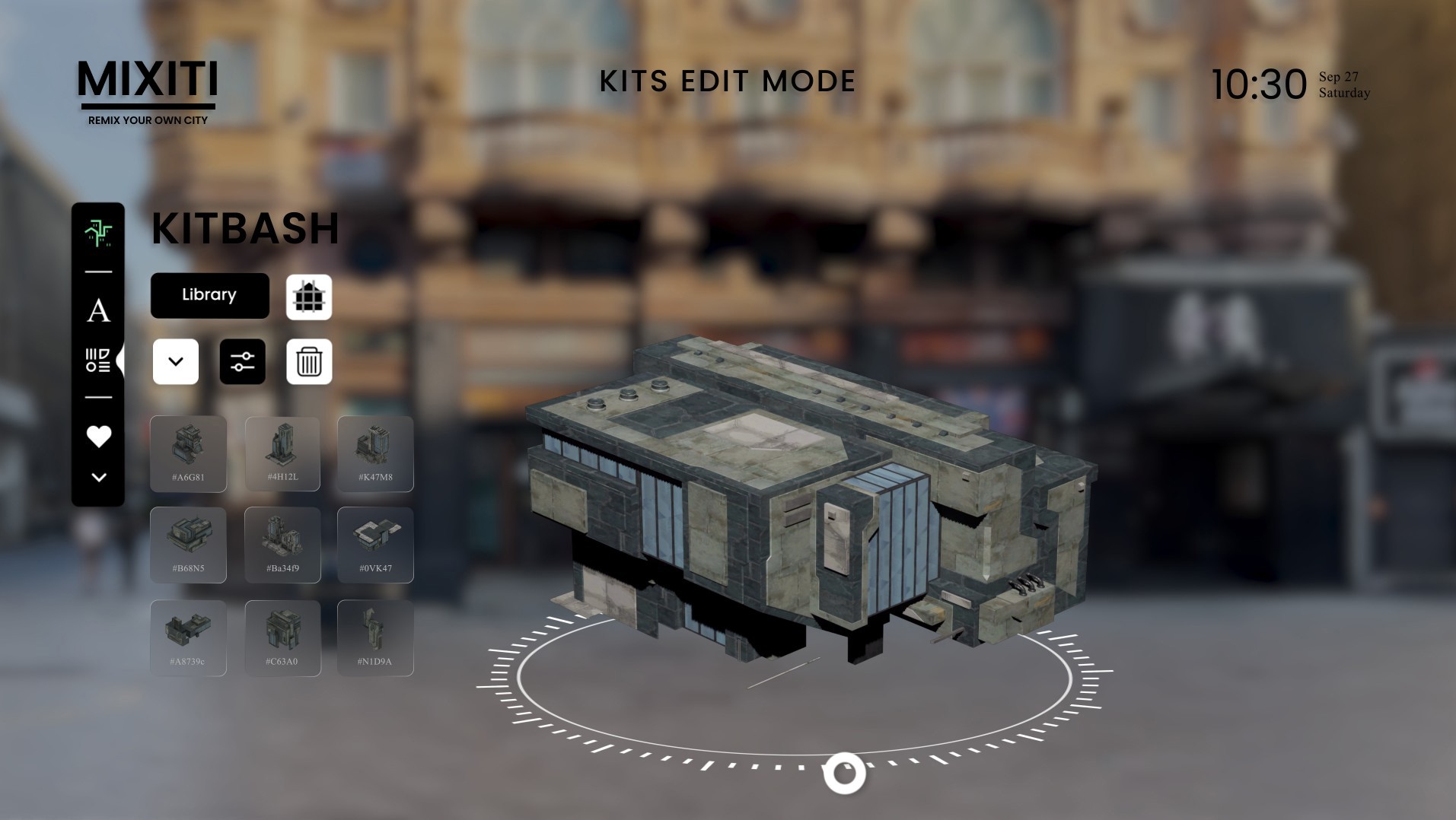
Kitbashing — compose with modular 3D components
AI + Kitbashing — blend both for full creative control
How it works
Enter, Explore, Create
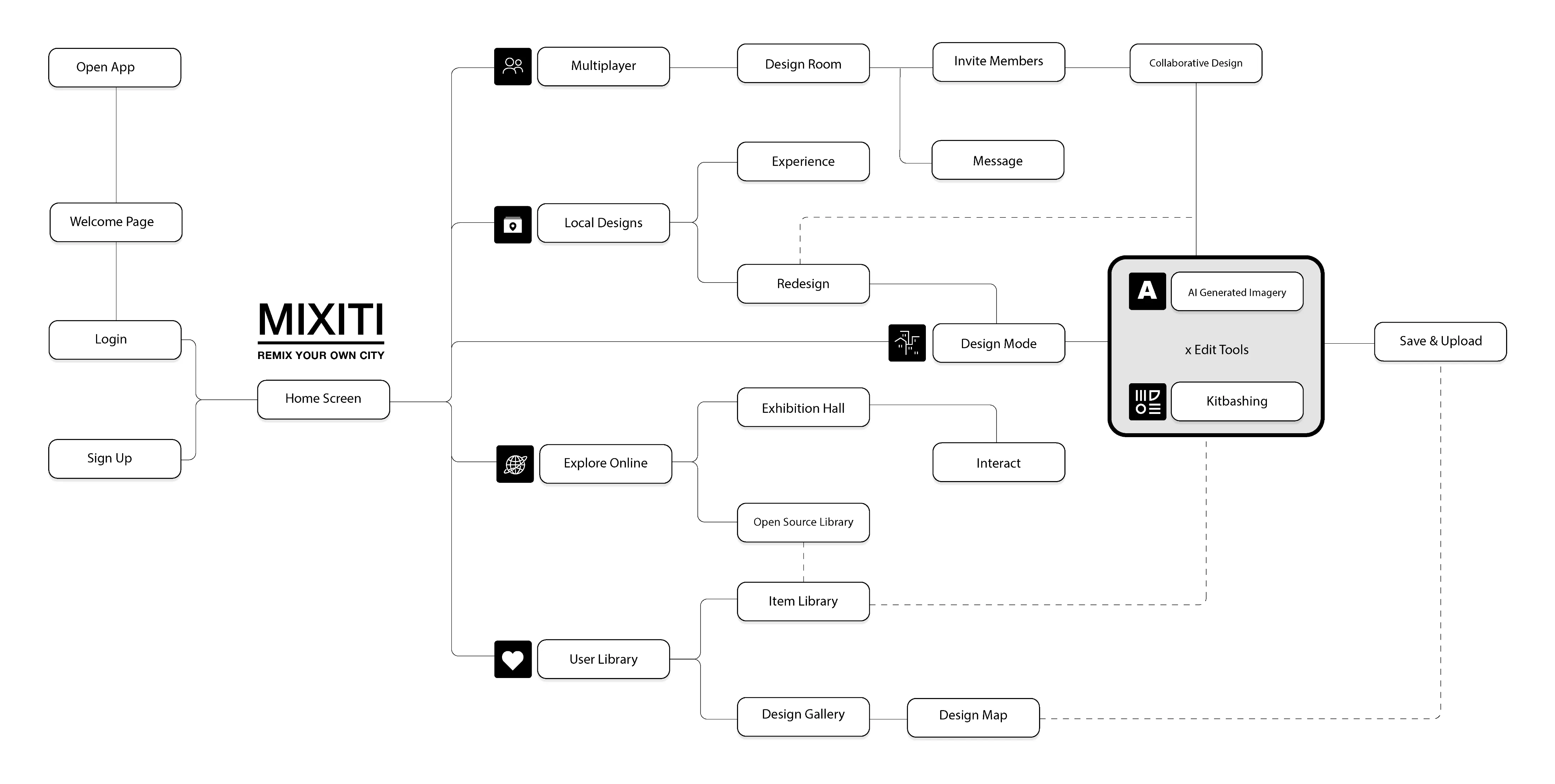
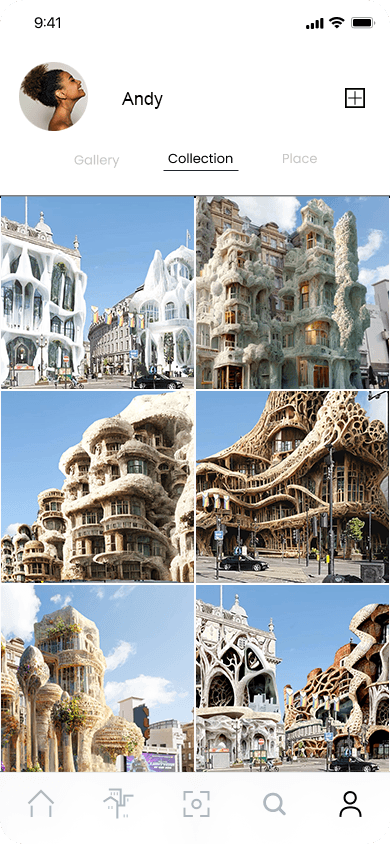
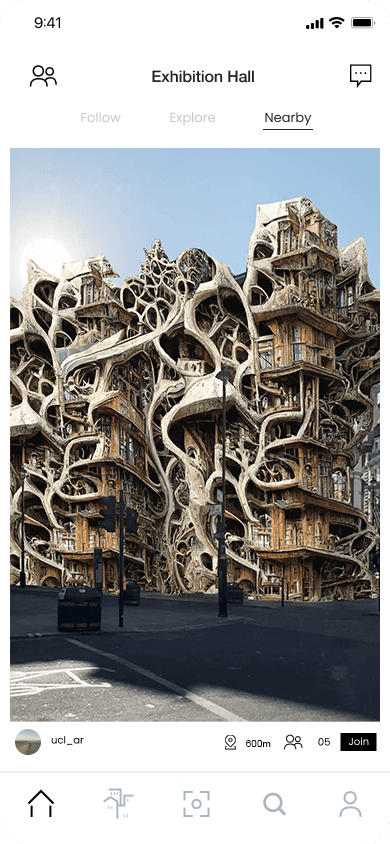
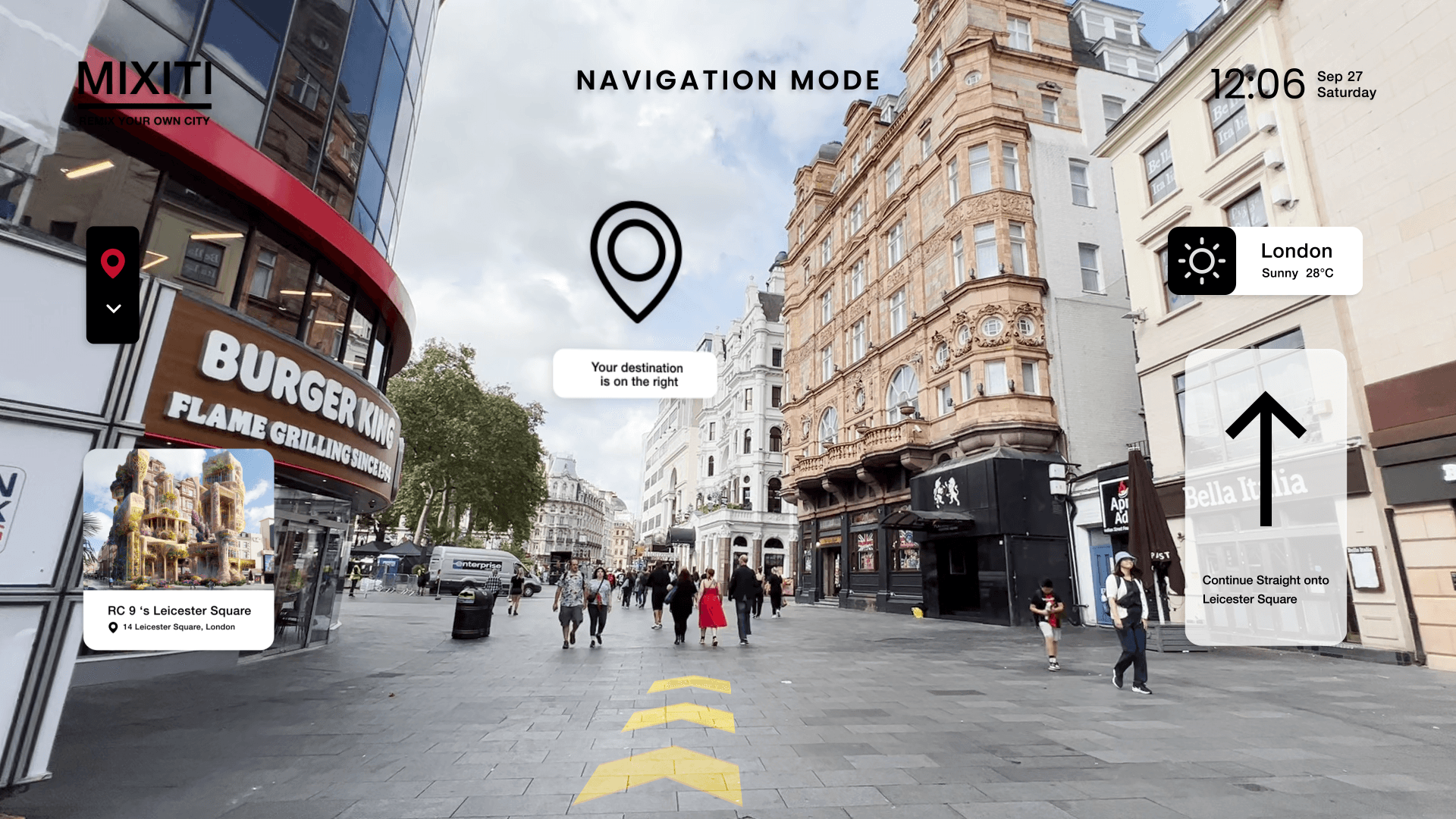
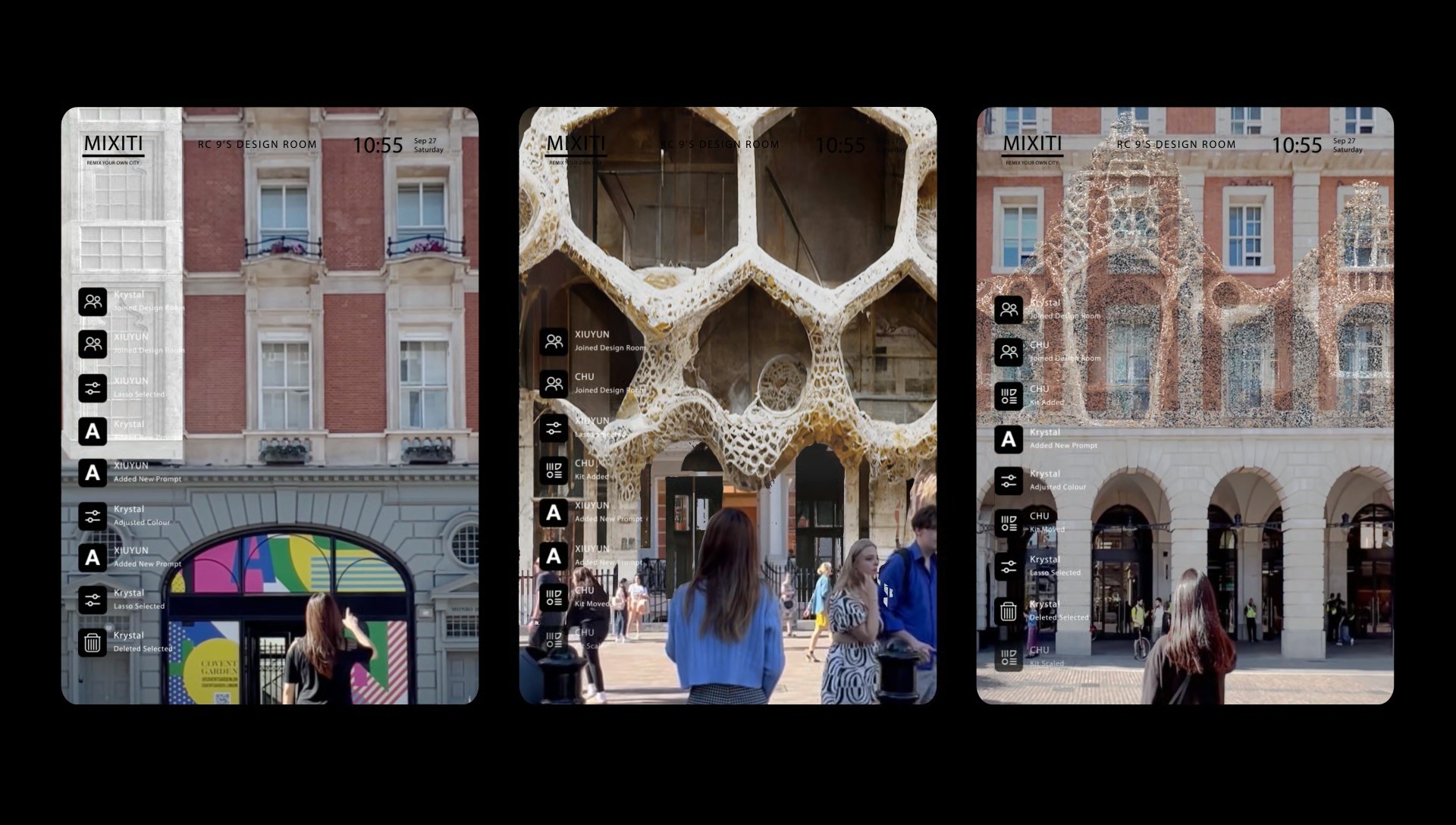
MIXITI's user flow is designed around three entry points — collaborative multiplayer sessions, personal local designs, and open online exploration — all converging into a unified design mode where users can create, remix, and upload their spaces.
My Takeaway
This was the project that changed how I think about users. Before MIXITI, I thought in spaces. After it, I started thinking in how people move through them — and why it feels natural or doesn't. Running experiment after experiment to find what makes someone actually want to engage with a city taught me that good UX has no fixed form factor. The principles stay the same. The medium changes. That's a lesson I bring into every product I touch now.
Chu
0901. 2021
More to explore.
©2021 - 2022
MIXITI*
MIXITI
Timeline
2021 - 2022
Team
Co-work with UCL RC9: Xu Zhang, Xiuyun Hu, Jill Lee
My Role
UIUX Design, AI Training, User Journey, 3D Module Design, Animation & Rendering
About
Remix the City: XR + AI Urban Design Platform
MIXITI — short for "remix the city" — is an XR Architecture and Cityscape Design Platform that bridges the physical and virtual worlds, enabling anyone to immerse themselves in and co-create the spaces around them.
Design Challenge
How might XR and AI turn passive city dwellers into active co-creators of urban space?
Research Goals
MIXITI explores three questions at the intersection of XR, AI, and urban experience:
Authorship
Can non-designers meaningfully participate in shaping the spaces around them?
Immersion
How do layered virtual environments change our perception of and relationship with physical space?
Co-creation
What does collaborative, real-time spatial design look like in an XR context?
Inspriation
When Sci-Fi Becomes Blueprint
In previous research, we're greatly inspired by serval movies and drama series in design process. The futuristic city pictured in both the Blade Runner and Altered Carbon, along with characters' interaction with virtual technology. How MR technology became embedded to people's daily lives is mesmerizing.
Platform Framework
The Framework: Where Tech Meets Creativity
Three pillars: AI generates façades from prompts. Kitbashing lets you remix pre-made 3D modules. A decentralized library keeps the asset ecosystem community-powered.
Usability
From Idea to Reality — No Experience Needed.
Explore — Browse AI-generated templates
Experiment — Tweak designs with gesture controls
Build — Assemble urban spaces in minutes
Design System
Design Approach
Three modes, one creative flow
AI-Generated — describe a space, AI renders it
Kitbashing — compose with modular 3D components
AI + Kitbashing — blend both for full creative control
How it works
Enter, Explore, Create
MIXITI's user flow is designed around three entry points — collaborative multiplayer sessions, personal local designs, and open online exploration — all converging into a unified design mode where users can create, remix, and upload their spaces.
My Takeaway
This was the project that changed how I think about users. Before MIXITI, I thought in spaces. After it, I started thinking in how people move through them — and why it feels natural or doesn't. Running experiment after experiment to find what makes someone actually want to engage with a city taught me that good UX has no fixed form factor. The principles stay the same. The medium changes. That's a lesson I bring into every product I touch now.
Chu
0901. 2021
More to explore.
©2021 - 2022
MIXITI*
MIXITI
Timeline
2021 - 2022
Team
Co-work with UCL RC9: Xu Zhang, Xiuyun Hu, Jill Lee
My Role
UIUX Design, AI Training, User Journey, 3D Module Design, Animation & Rendering
About
Remix the City: XR + AI Urban Design Platform
MIXITI — short for "remix the city" — is an XR Architecture and Cityscape Design Platform that bridges the physical and virtual worlds, enabling anyone to immerse themselves in and co-create the spaces around them.
Design Challenge
How might XR and AI turn passive city dwellers into active co-creators of urban space?
Research Goals
MIXITI explores three questions at the intersection of XR, AI, and urban experience:
Authorship
Can non-designers meaningfully participate in shaping the spaces around them?
Immersion
How do layered virtual environments change our perception of and relationship with physical space?
Co-creation
What does collaborative, real-time spatial design look like in an XR context?
Inspriation
When Sci-Fi Becomes Blueprint
In previous research, we're greatly inspired by serval movies and drama series in design process. The futuristic city pictured in both the Blade Runner and Altered Carbon, along with characters' interaction with virtual technology. How MR technology became embedded to people's daily lives is mesmerizing.
Platform Framework
The Framework: Where Tech Meets Creativity
Three pillars: AI generates façades from prompts. Kitbashing lets you remix pre-made 3D modules. A decentralized library keeps the asset ecosystem community-powered.
Usability
From Idea to Reality — No Experience Needed.
Explore — Browse AI-generated templates
Experiment — Tweak designs with gesture controls
Build — Assemble urban spaces in minutes
Design System
Design Approach
Three modes, one creative flow
AI-Generated — describe a space, AI renders it
Kitbashing — compose with modular 3D components
AI + Kitbashing — blend both for full creative control
How it works
Enter, Explore, Create
MIXITI's user flow is designed around three entry points — collaborative multiplayer sessions, personal local designs, and open online exploration — all converging into a unified design mode where users can create, remix, and upload their spaces.
My Takeaway
This was the project that changed how I think about users. Before MIXITI, I thought in spaces. After it, I started thinking in how people move through them — and why it feels natural or doesn't. Running experiment after experiment to find what makes someone actually want to engage with a city taught me that good UX has no fixed form factor. The principles stay the same. The medium changes. That's a lesson I bring into every product I touch now.
Chu
0901. 2021