©2024-2026
CUBvn*

Timeline
3 weeks
Team
Co work with Lead Designer, PMs, iOS & Android RDs, QA Team
My Role
UIUX Desgin
About
CUBvn is a digital lending app built to make borrowing simple and human. In early 2025, the team set an aggressive goal — scale loan approvals to $100M in eight months.
The Challenge
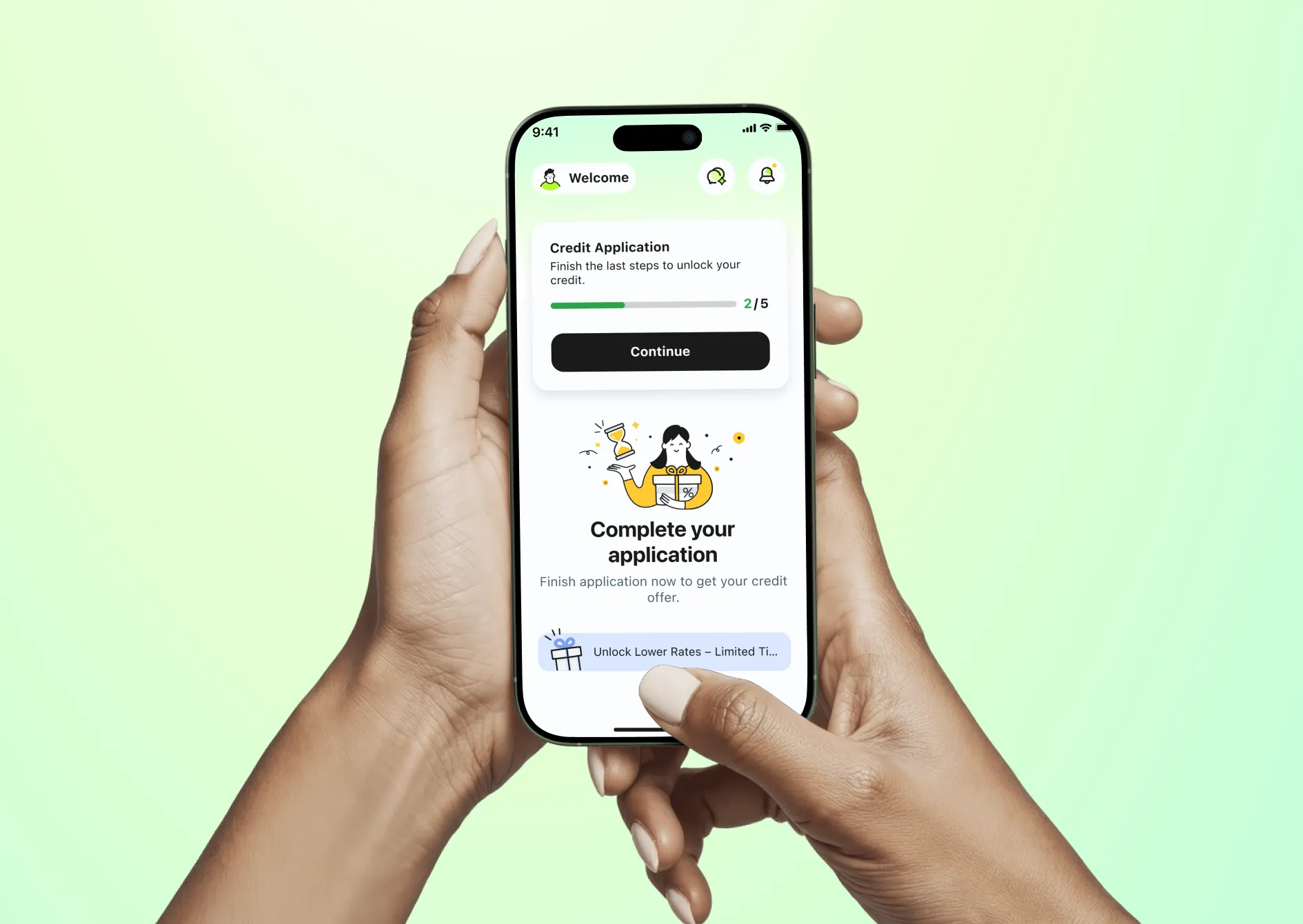
Two silent UX failures were quietly killing growth: a credit application users couldn't finish, and a verification step users couldn't pass.
Users were dropping off at two critical points — but no one knew exactly why. The credit application flow had too many steps users couldn't navigate alone. The verification step was hitting a hardware wall: users without NFC-enabled phones couldn't proceed at all. Both problems were invisible in the metrics until we dug in. This case covers Chapter 02 —tackles the verification gap. Chapter 01 fixing the application flow.
Chapter 02
Bridge Hardware Gap via
Human Support Verification
Problem
When Verification Fails, Growth Stops
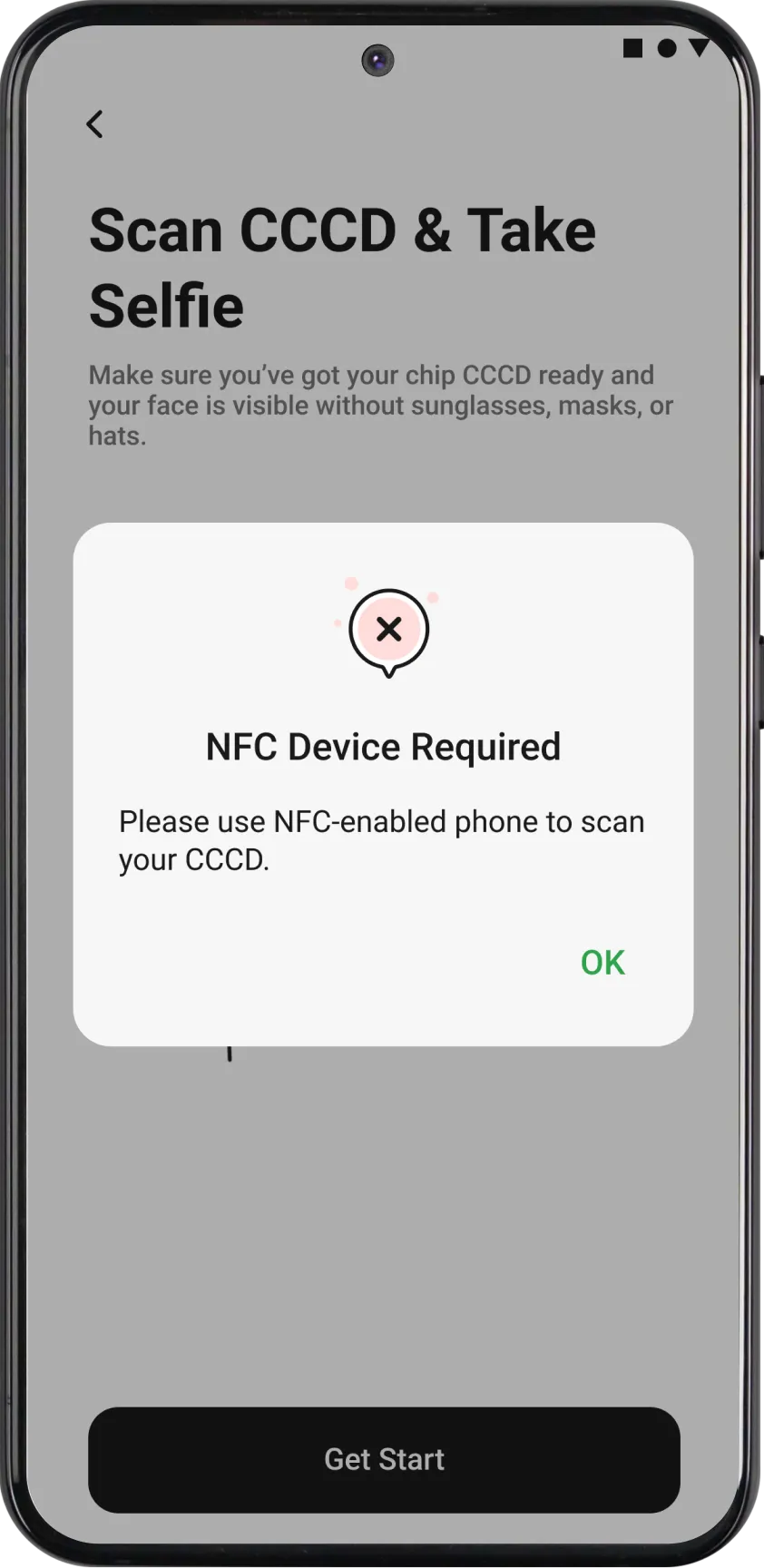
Users were ready to apply for credit, but their device got in the way. Compatibility issues across older iOS and certain Android models meant that for some users, the door to our app was closed before they even knocked.
45.2% Android Pass Rate
Many Android models don't support NFC. Fewer than half made it through on the first try.
Only 5.8% Completion Rate
Every blocked user was a lost application. A product gap disguised as a user problem.
10.3%
User Blocked
1 in 10 users couldn't pass eKYC due to no NFC support.
📱 Can't do NFC Scanning
😭 Entry blocked
Hardware Gap
01
No NFC, no way in
Older devices had no NFC support and the app offered no alternative.
Platform Gap
02
Android fragmentation cuts deep
Device variety meant NFC support was never guaranteed across Android.
Silent Failure
03
Users left without explanation
When NFC failed, users saw an error and had nowhere to go.
Reframing the Problem
From a hardware problem to a human opportunity
These weren't three separate problems. They were the same wall seen from different angles. So we stopped asking how to fix NFC and started asking how to make sure no user gets left behind.
My Insight
Technology failed them. We decided not to. We reframed verification as a trust-building moment.
One that a person, not a device, could complete.
The Tension
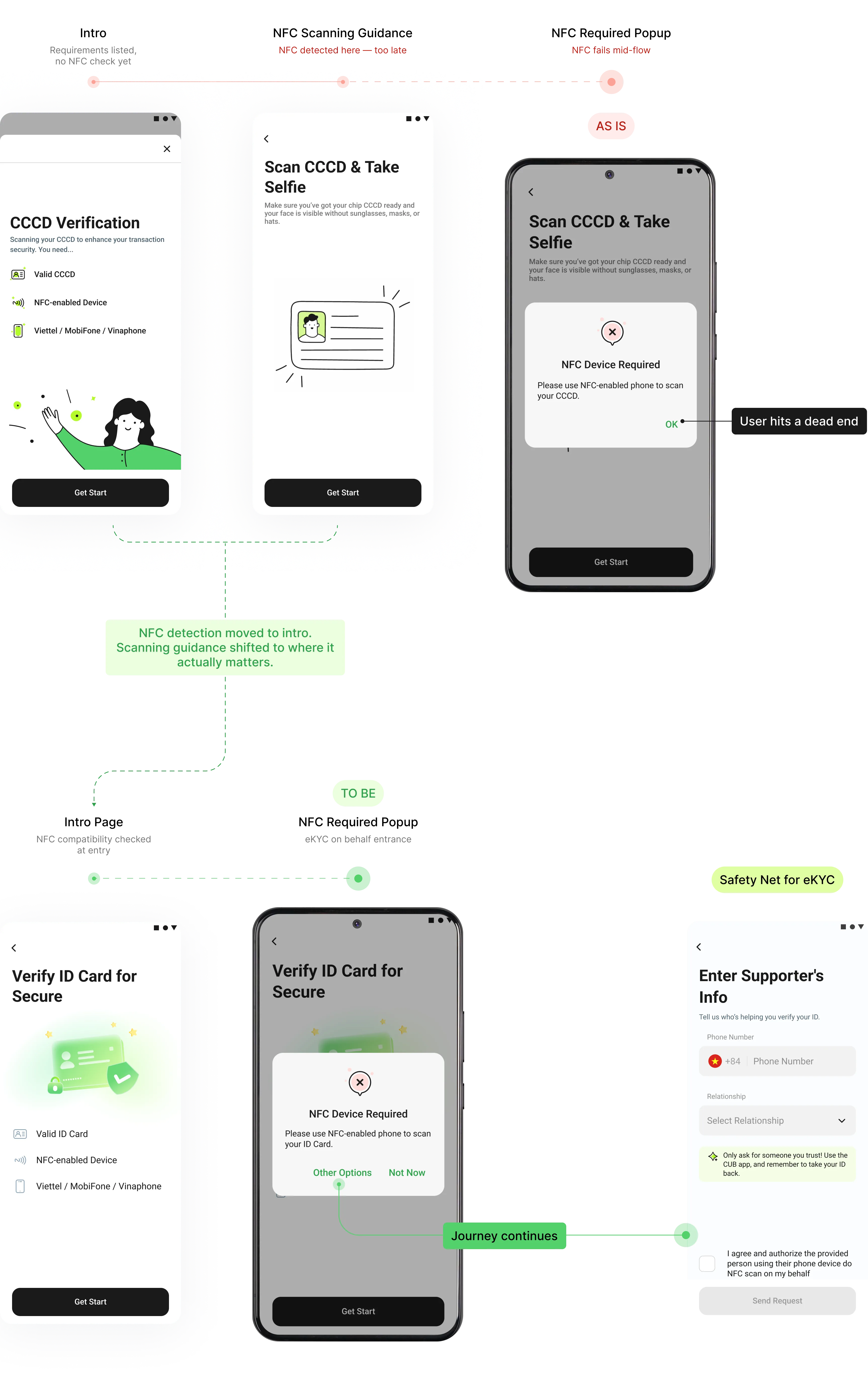
The human-assisted path is costly, so the product owner didn't want users defaulting to it. We moved NFC detection to the intro page to identify users who needed help early. "Other Options" stayed visible but secondary. A safety net, not a shortcut.
Solution
When tech hits a wall,
we build a door.
We tackled the problem from two angles. First, we fixed the entry path so users know upfront if they need help. Then we built a human-assisted flow that lets our 3 local partners complete verification on their behalf.
Frictionless Entry
01
Fix the path before the feature
NFC detection moved to step one. Scanning guidance shifted to where it's needed.
Early Detection
02
Partner up, not just patch up
Where tech can't help, people can. 3 local partners step in to complete verification on the user's behalf.
Dual Flow
03
One request. Two sides moving
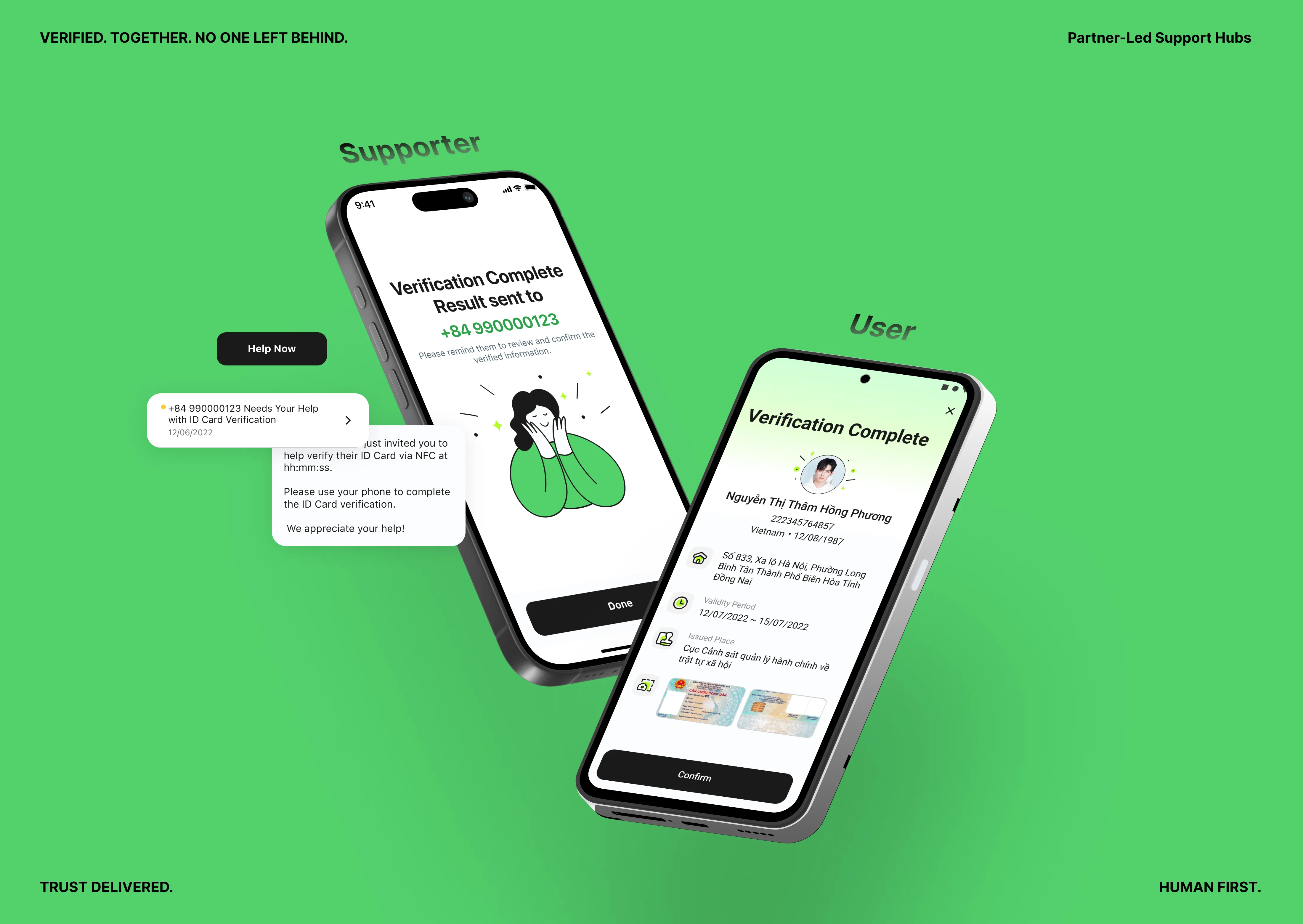
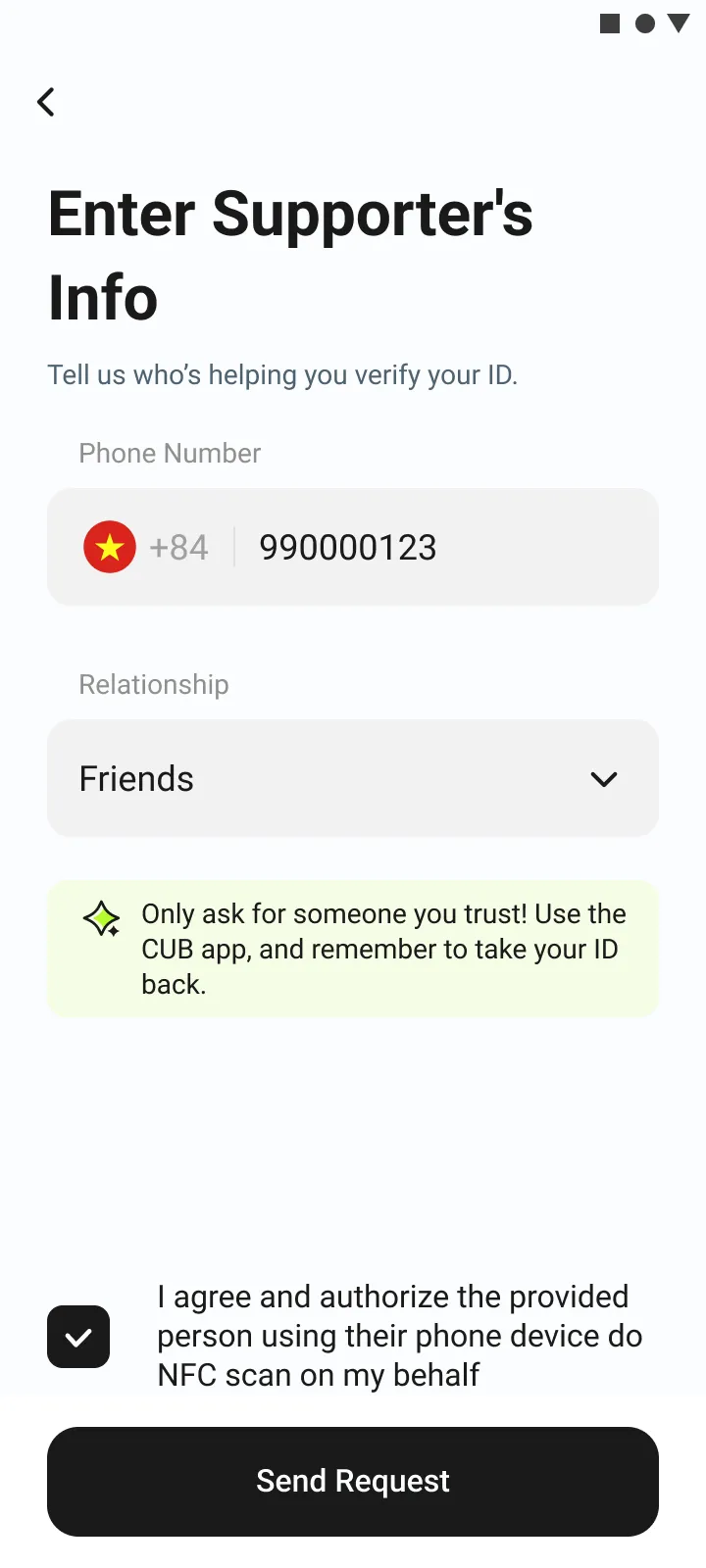
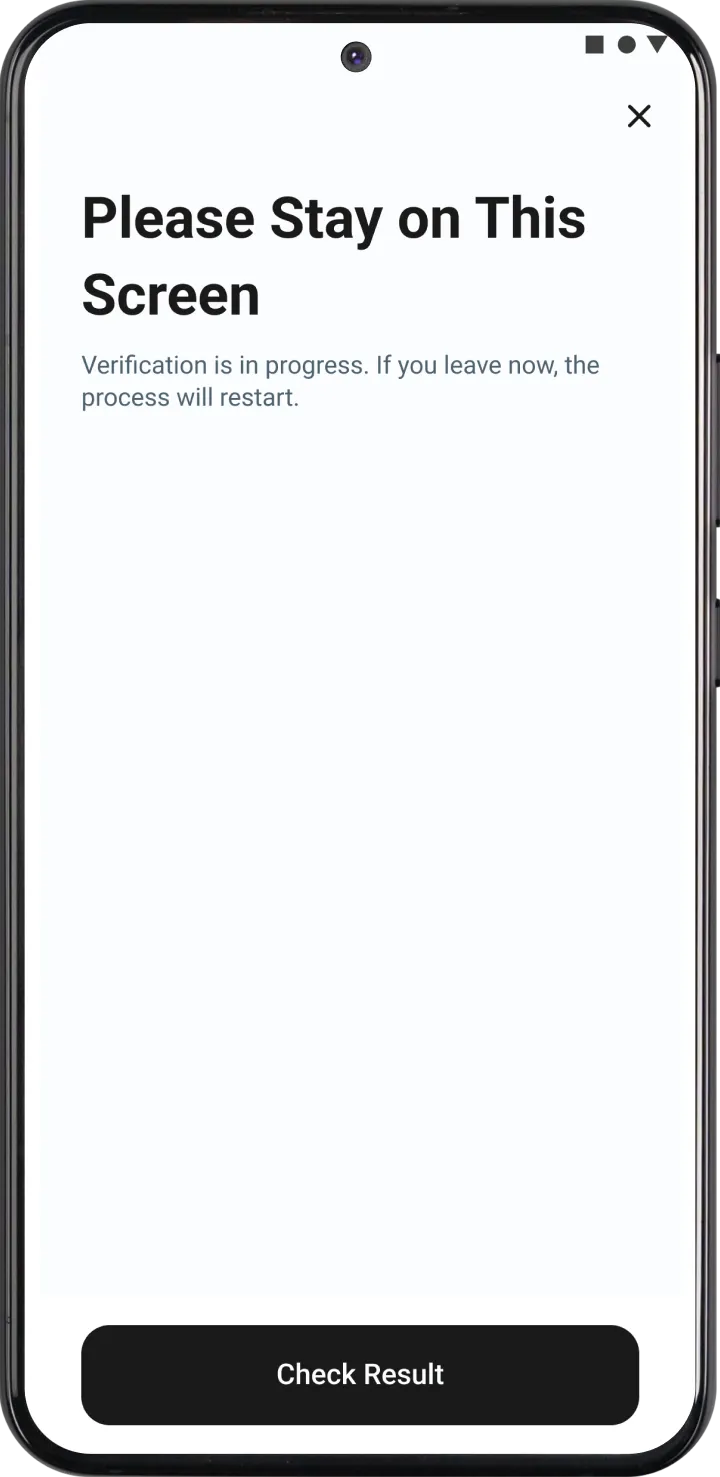
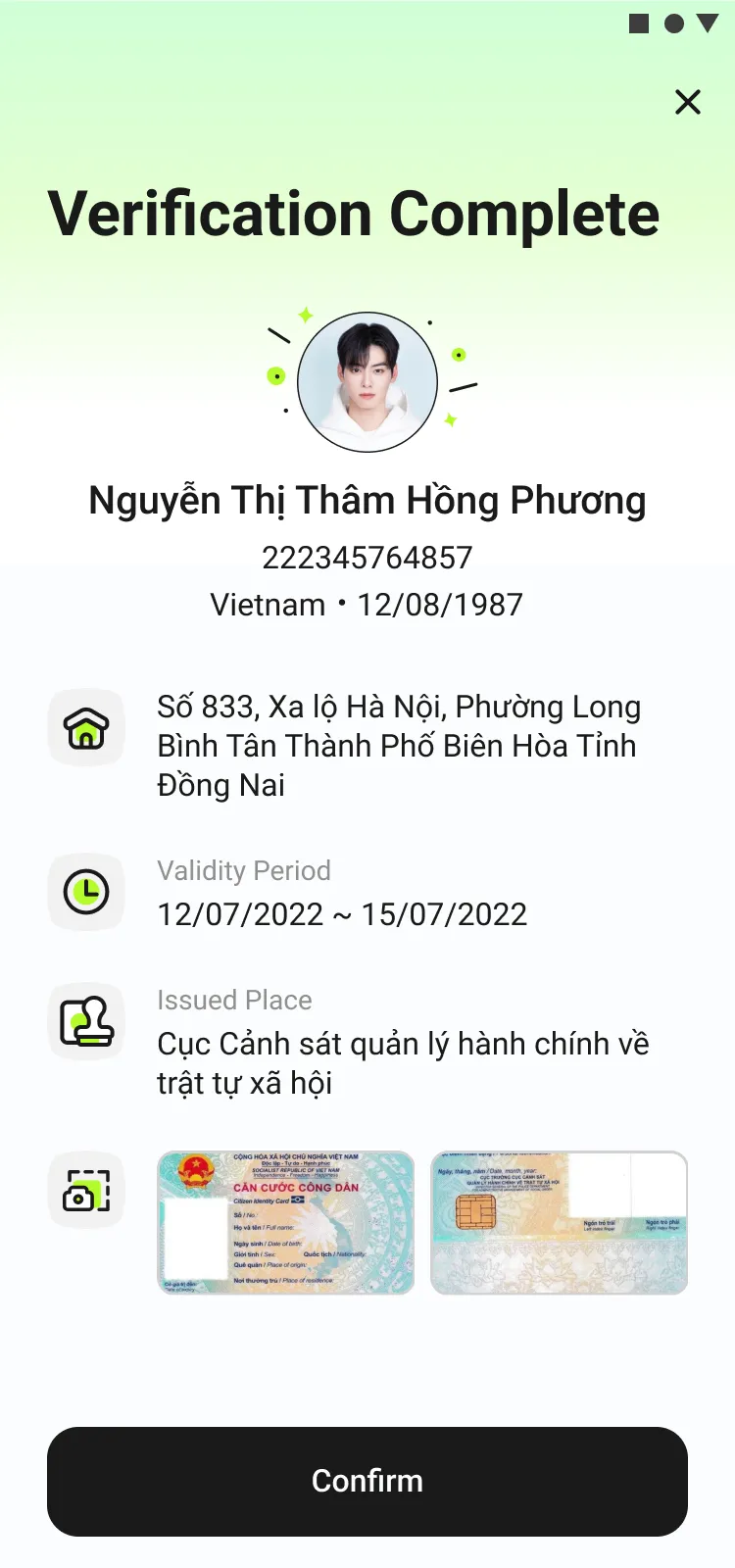
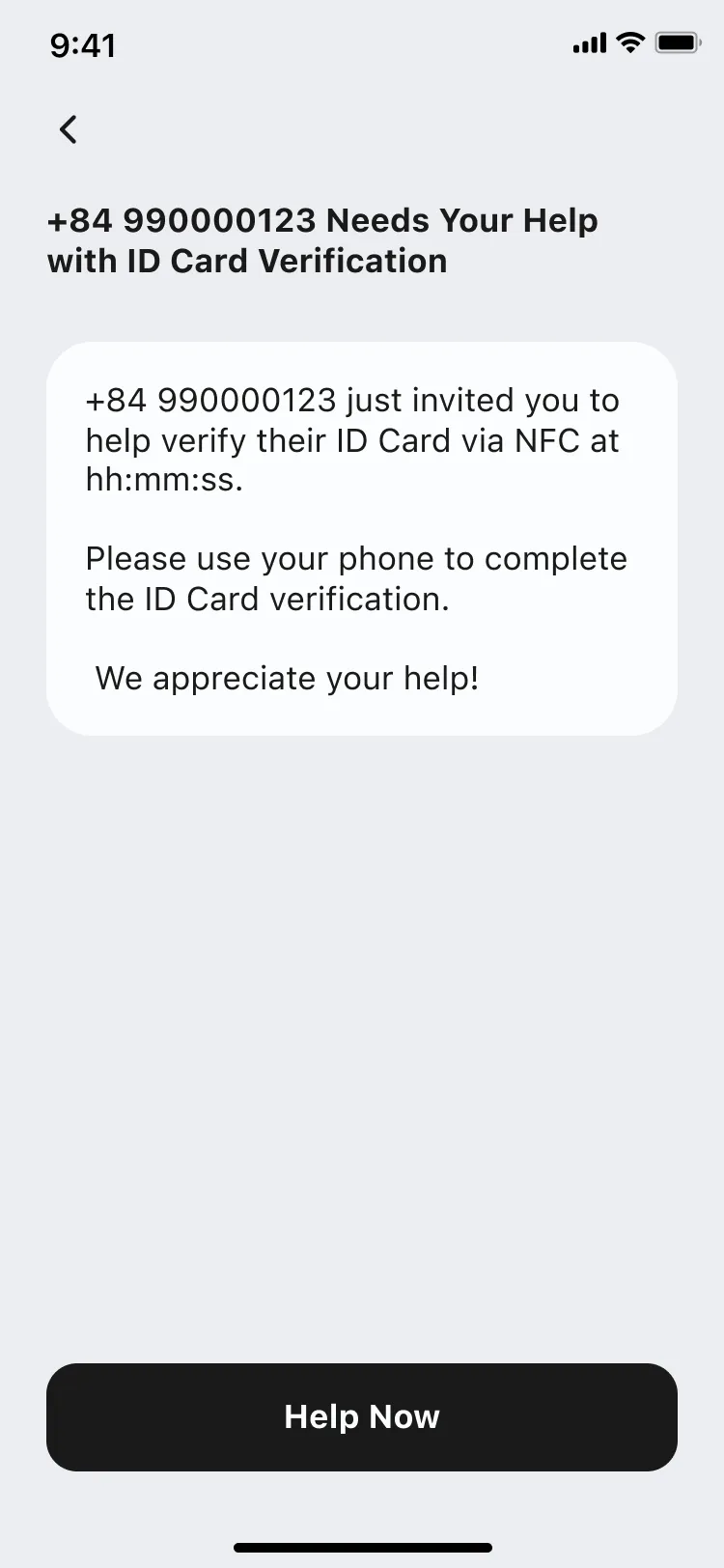
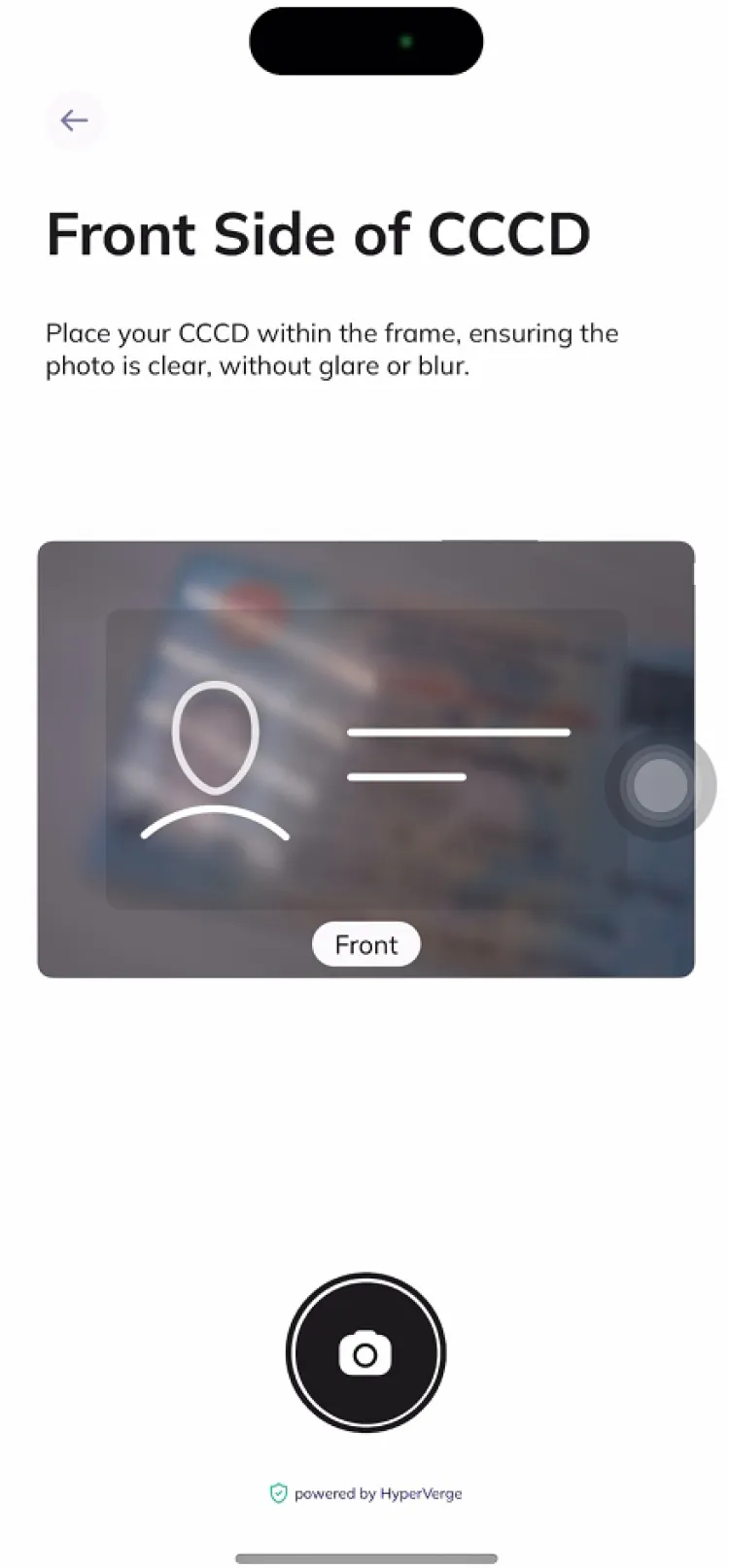
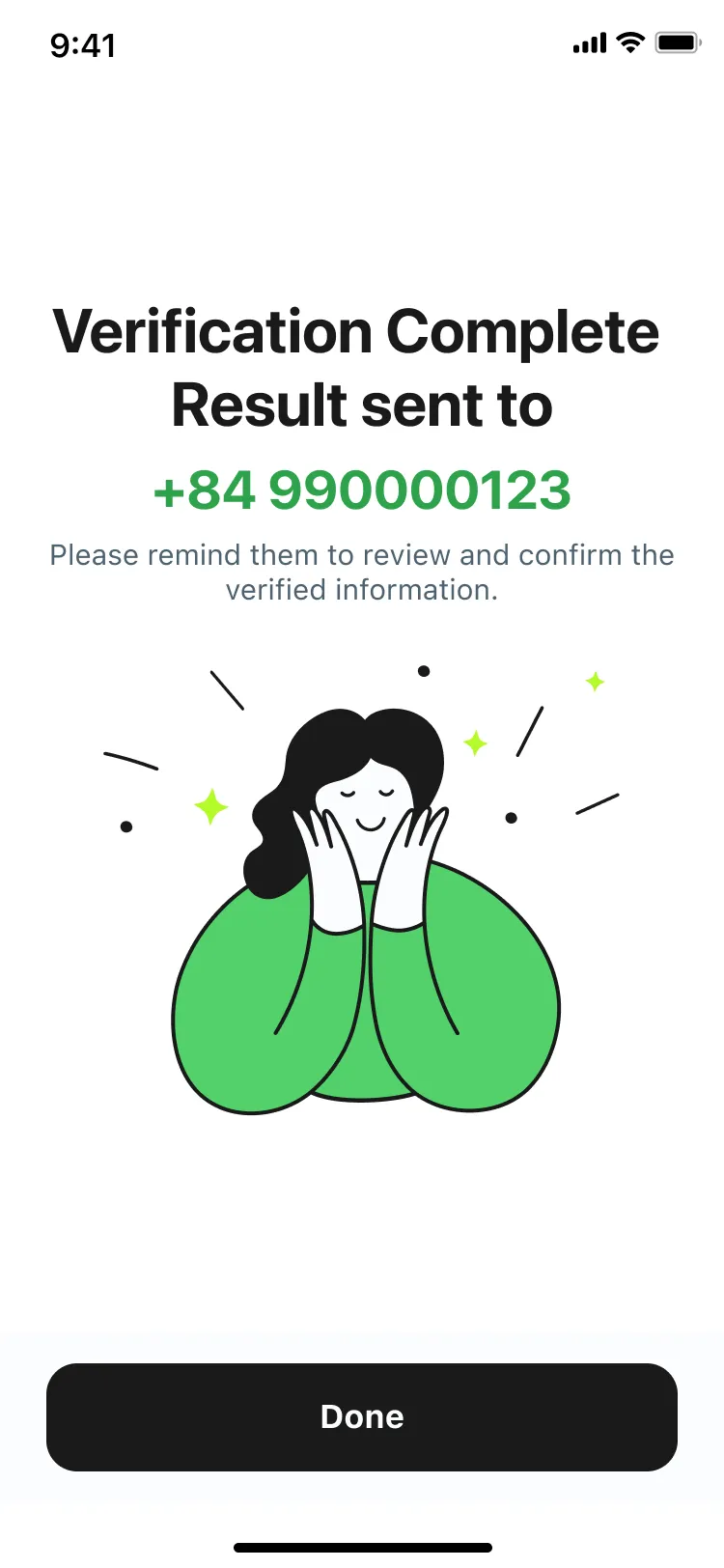
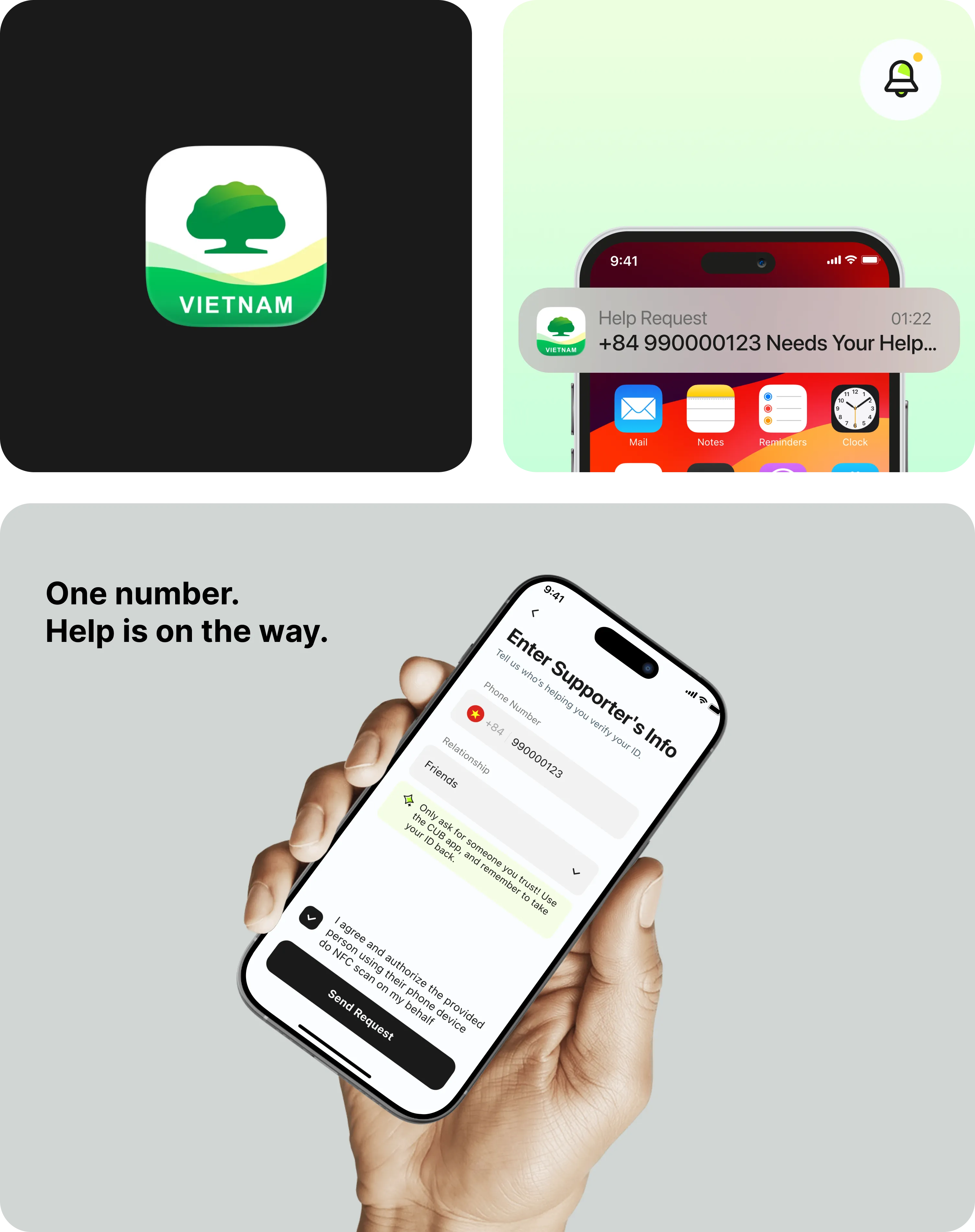
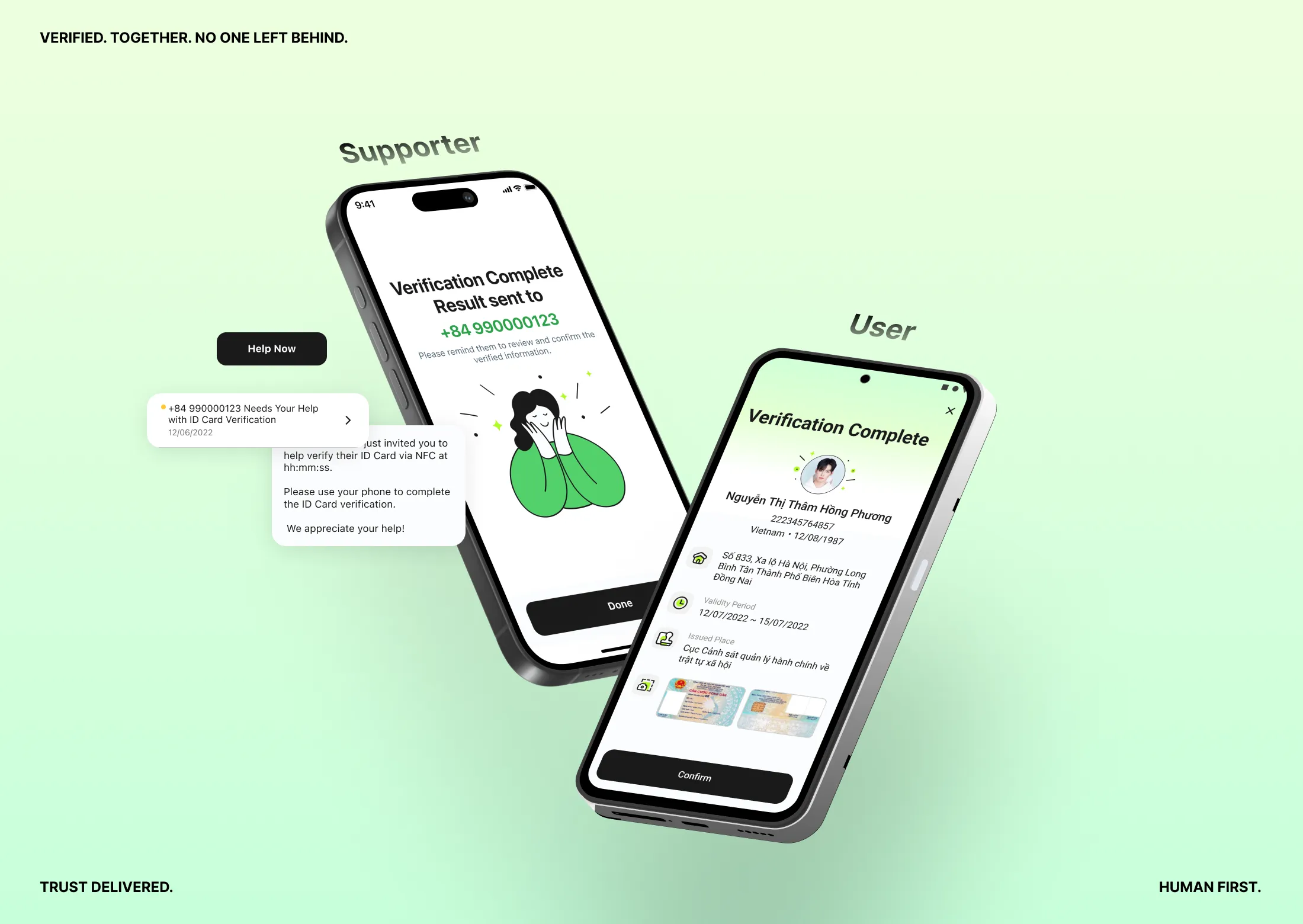
User enters a supporter's number, staff gets notified instantly. User stays on the waiting screen until verification is complete.
How it works
Designing a Safety Net for eKYC
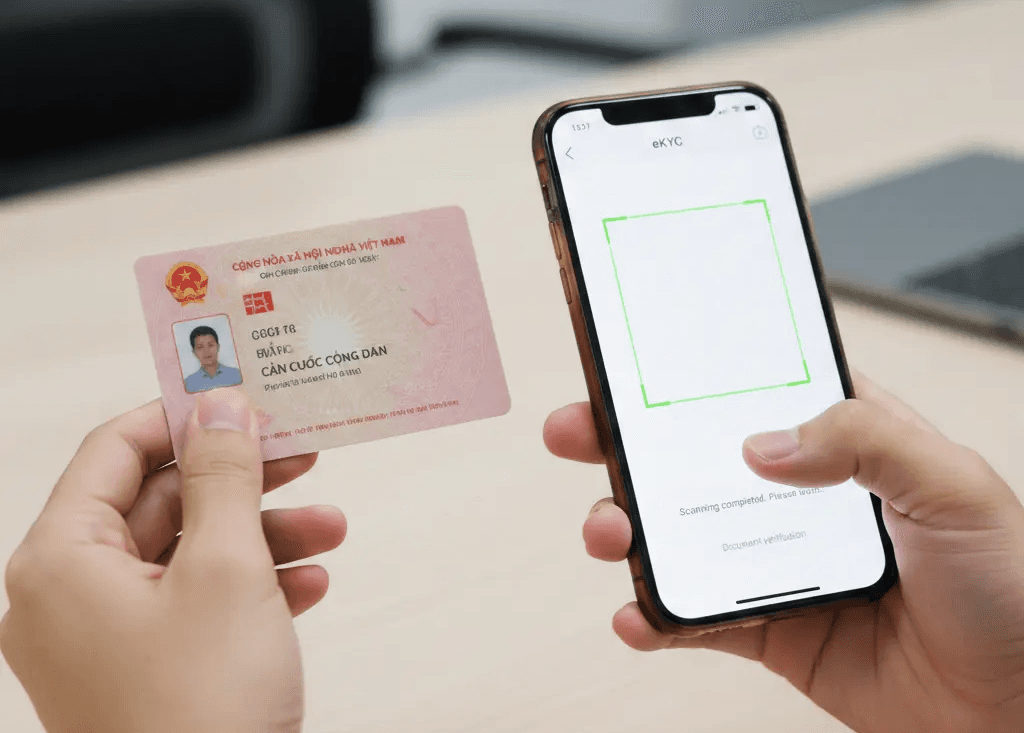

Three steps. One partner nearby. Users who can't pass NFC on their own are guided through a human-assisted process. No restart, no dead end.

Step 1
Visit one of our trusted local partners

Step 2
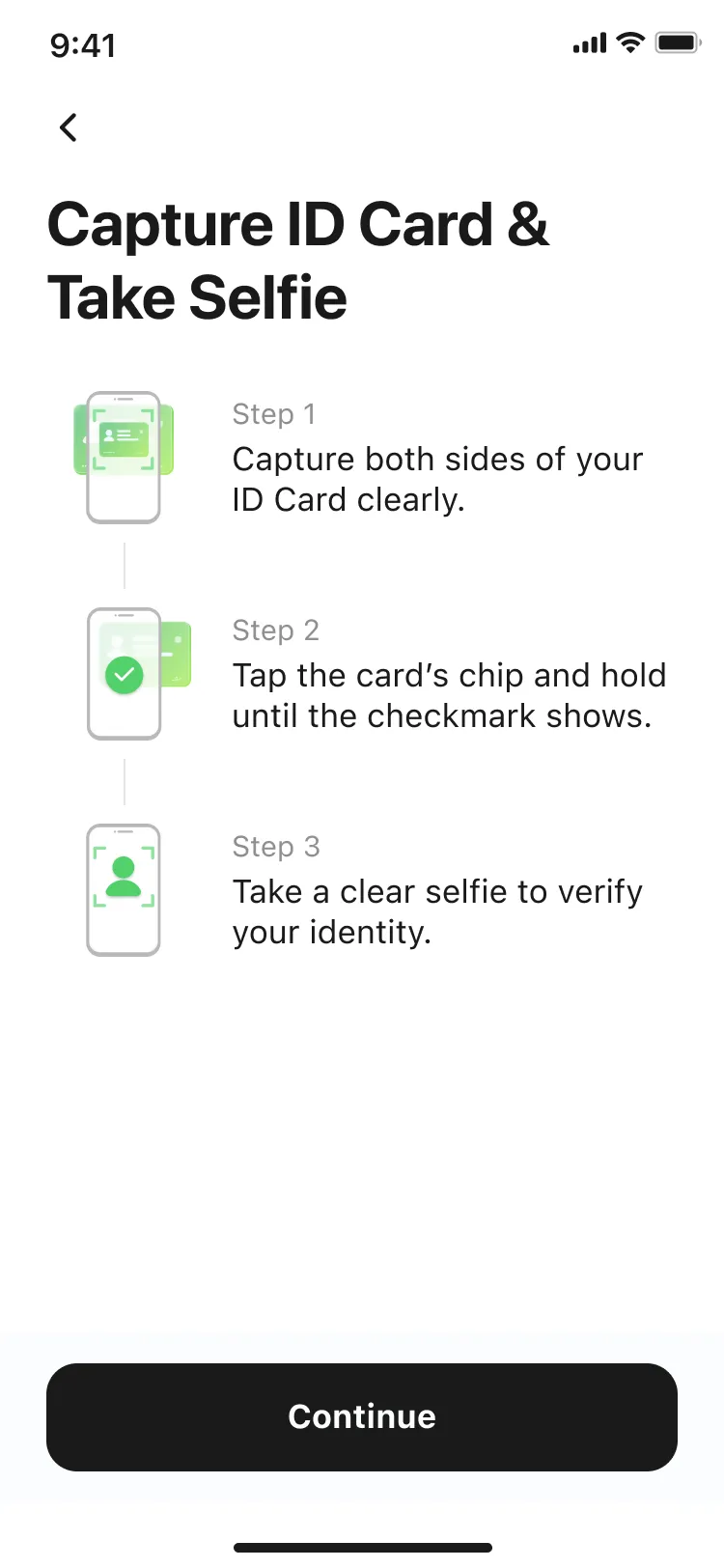
Staff will initiate the assisted setup
Step 3
Staff completes eKYC and updates status
New Changes Only
User Side
1.0
Onboarding
1.1
Hardware Gap
NFC Not Supported
1.2
Request Help
Connect via Phone Number
2.0
eKYC Verification
2.1
Live Status
Syncing with Assistant
2.2
Timeout
1.Helper inactive
2. Request expired
3.0
Verified
3.1
View final results
4.0
Feature Unloacked
Staff Side
1.0
Notification
1.1
Received
Verification Request
2.0
Onboarding
2.1
Helper
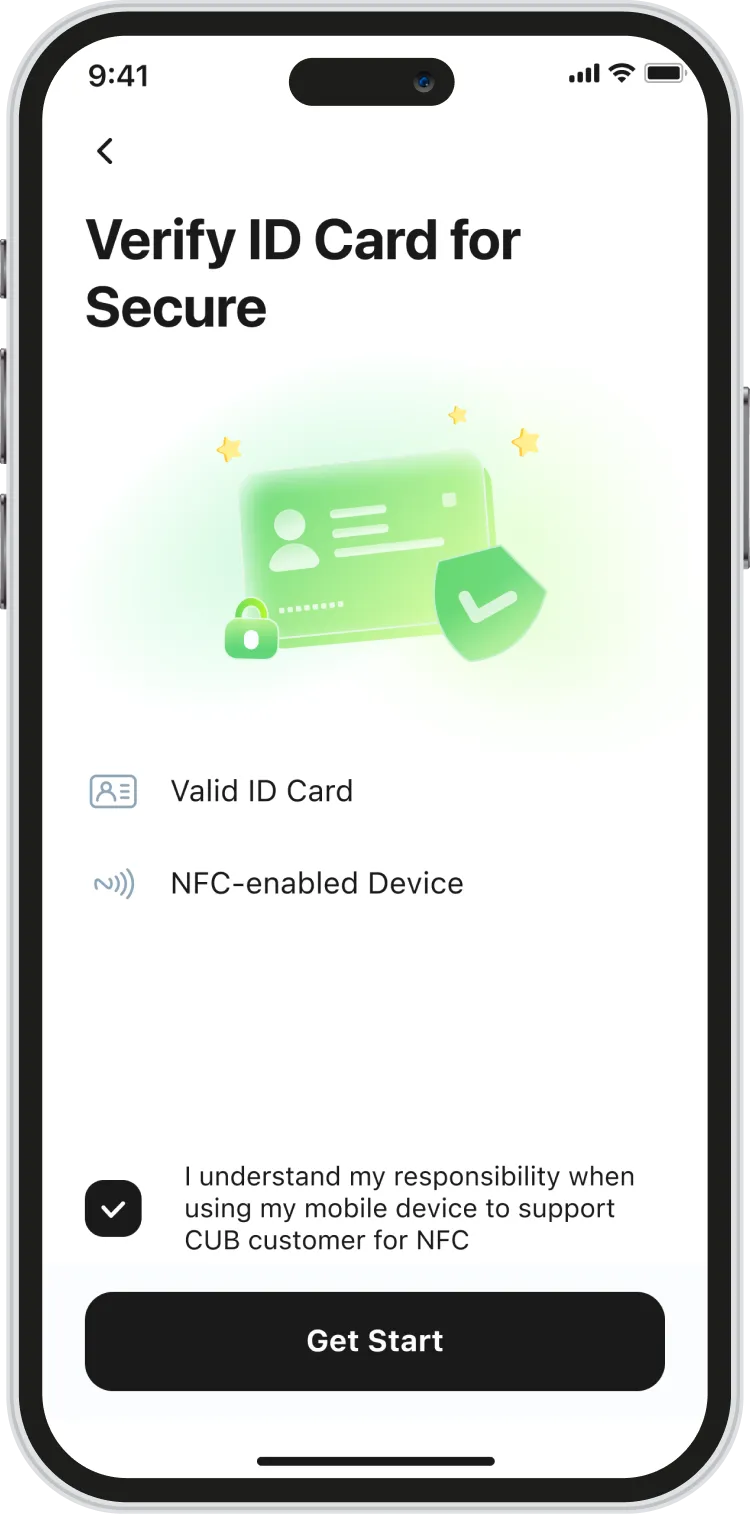
Agreement & Terms
3.0
Identity Check
3.1
Secure Helper
Authentication
4.0
Assisted eKYC
5.0
Completion
5.1
Confirmation
Sent to User
User Side
Supporter Side
Verified Result Sent to User 🚀

Outcome
Shifting Blocked User into Growth Channel
We unlocked access for the previously blocked user, and after 5 months data tracking the data is keep growing
+62.3%
Completion Rate From
Human Assisted Channel
Nearly 94%
Verification Success Rate
5.8%
SEP
19.2%
OCT
41.7%
NOV
53.4%
DEC
68.1%
JAN
Our 3 local partners are
still pushing this feature.
Post-Launch Growth 🚀
My Takeaway
CUBvn taught me that a drop-off rate is a user telling you something isn't working. The real challenge wasn't the screen — it was finding what was broken underneath it. Every decision, from hierarchy to component architecture, came back to one question: does this make it easier for the user to say yes?
Chu
0203. 2026
More to explore.

©2024-2026
CUBvn*
Timeline
3 weeks
Team
Co work with Lead Designer, PMs, iOS & Android RDs, QA Team
My Role
UIUX Desgin
About
CUBvn is a digital lending app built to make borrowing simple and human. In early 2025, the team set an aggressive goal — scale loan approvals to $100M in eight months.
The Challenge
Two silent UX failures were quietly killing growth: a credit application users couldn't finish, and a verification step users couldn't pass.
Users were dropping off at two critical points — but no one knew exactly why. The credit application flow had too many steps users couldn't navigate alone. The verification step was hitting a hardware wall: users without NFC-enabled phones couldn't proceed at all. Both problems were invisible in the metrics until we dug in. This case covers Chapter 02 —tackles the verification gap. Chapter 01 fixing the application flow.
Chapter 02
Bridge Hardware Gap via
Human Support Verification
Problem
When Verification Fails, Growth Stops
Users were ready to apply for credit, but their device got in the way. Compatibility issues across older iOS and certain Android models meant that for some users, the door to our app was closed before they even knocked.
45.2% Android Pass Rate
Many Android models don't support NFC. Fewer than half made it through on the first try.
Only 5.8% Completion Rate
Every blocked user was a lost application. A product gap disguised as a user problem.
10.3% User Blocked
1 in 10 users couldn't pass eKYC due to no NFC support.
📱 Can't do NFC Scanning
😭 Entry blocked
Hardware Gap
01
No NFC, no way in
Older devices had no NFC support and the app offered no alternative.
Platform Gap
02
Android fragmentation cuts deep
Device variety meant NFC support was never guaranteed across Android.
Silent Failure
03
Users left without explanation
When NFC failed, users saw an error and had nowhere to go.
Reframing the Problem
From a hardware problem to a human opportunity
These weren't three separate problems. They were the same wall seen from different angles. So we stopped asking how to fix NFC and started asking how to make sure no user gets left behind.
My Insight
Technology failed them. We decided not to. We reframed verification as a trust-building moment.
One that a person, not a device, could complete.
The Tension
The human-assisted path is costly, so the product owner didn't want users defaulting to it. We moved NFC detection to the intro page to identify users who needed help early. "Other Options" stayed visible but secondary. A safety net, not a shortcut.
Solution
When tech hits a wall,
we build a door.
We tackled the problem from two angles. First, we fixed the entry path so users know upfront if they need help. Then we built a human-assisted flow that lets our 3 local partners complete verification on their behalf.
Frictionless Entry
01
Fix the path before the feature
NFC detection moved to step one. Scanning guidance shifted to where it's needed.
Early Detection
02
Partner up, not just patch up
Where tech can't help, people can. 3 local partners step in to complete verification on the user's behalf.
Dual Flow
03
One request. Two sides moving
User enters a supporter's number, staff gets notified instantly. User stays on the waiting screen until verification is complete.
How it works
Designing a Safety Net for eKYC
Three steps. One partner nearby. Users who can't pass NFC on their own are guided through a human-assisted process. No restart, no dead end.
Step 1
Visit one of our trusted local partners
Step 2
Staff will initiate the assisted setup
Step 3
Staff completes eKYC and updates status
New Changes Only
Staff Side
1.0
Notification
1.1
Received
Verification Request
2.0
Onboarding
2.1
Helper
Agreement & Terms
3.0
Identity Check
3.1
Secure Helper
Authentication
4.0
Assisted eKYC
5.0
Completion
5.1
Confirmation Sent to User
User Side
1.0
Onboarding
1.1
Hardware Gap
NFC Not Supported
1.2
Request Help
Connect via Phone Number
2.0
eKYC Verification
2.1
Live Status
Syncing with Assistant
2.2
Timeout
1.Helper inactive
2. Request expired
3.0
Verified
3.1
View final results
4.0
Feature Unloacked
User Side
Supporter Side
Verified Result Sent to User 🚀
Outcome
Shifting Blocked User into Growth Channel
We unlocked access for the previously blocked user, and after 5 months data tracking the data is keep growing
+62.3%
Completion Rate From
Human Assisted Channel
Nearly 94%
Verification Success Rate
5.8%
SEP
19.2%
OCT
41.7%
NOV
53.4%
DEC
68.1%
JAN
Our 3 local partners are
still pushing this feature.
Post-Launch Growth 🚀
My Takeaway
CUBvn taught me that a drop-off rate is a user telling you something isn't working. The real challenge wasn't the screen — it was finding what was broken underneath it. Every decision, from hierarchy to component architecture, came back to one question: does this make it easier for the user to say yes?
Chu
0203. 2026
More to explore.
©2024-2026
CUBvn*
Timeline
3 weeks
Team
Co work with Lead Designer, PMs, iOS & Android RDs, QA Team
My Role
UIUX Desgin
About
CUBvn is a digital lending app built to make borrowing simple and human. In early 2025, the team set an aggressive goal — scale loan approvals to $100M in eight months.
The Challenge
Two silent UX failures were quietly killing growth: a credit application users couldn't finish, and a verification step users couldn't pass.
Users were dropping off at two critical points — but no one knew exactly why. The credit application flow had too many steps users couldn't navigate alone. The verification step was hitting a hardware wall: users without NFC-enabled phones couldn't proceed at all. Both problems were invisible in the metrics until we dug in. This case covers Chapter 02 —tackles the verification gap. Chapter 01 fixing the application flow.
Chapter 02
Bridge Hardware Gap via
Human Support Verification
Problem
When Verification Fails, Growth Stops
Users were ready to apply for credit, but their device got in the way. Compatibility issues across older iOS and certain Android models meant that for some users, the door to our app was closed before they even knocked.
45.2% Android Pass Rate
Many Android models don't support NFC. Fewer than half made it through on the first try.
Only 5.8% Completion Rate
Every blocked user was a lost application. A product gap disguised as a user problem.
10.3% User Blocked
1 in 10 users couldn't pass eKYC due to no NFC support.
📱 Can't do NFC Scanning
😭 Entry blocked
Hardware Gap
01
No NFC, no way in
Older devices had no NFC support and the app offered no alternative.
Platform Gap
02
Android fragmentation cuts deep
Device variety meant NFC support was never guaranteed across Android.
Silent Failure
03
Users left without explanation
When NFC failed, users saw an error and had nowhere to go.
Reframing the Problem
From a hardware problem to a human opportunity
These weren't three separate problems. They were the same wall seen from different angles. So we stopped asking how to fix NFC and started asking how to make sure no user gets left behind.
My Insight
Technology failed them. We decided not to. We reframed verification as a trust-building moment.
One that a person, not a device, could complete.
The Tension
The human-assisted path is costly, so the product owner didn't want users defaulting to it. We moved NFC detection to the intro page to identify users who needed help early. "Other Options" stayed visible but secondary. A safety net, not a shortcut.
Solution
When tech hits a wall,
we build a door.
We tackled the problem from two angles. First, we fixed the entry path so users know upfront if they need help. Then we built a human-assisted flow that lets our 3 local partners complete verification on their behalf.
Frictionless Entry
01
Fix the path before the feature
NFC detection moved to step one. Scanning guidance shifted to where it's needed.
Early Detection
02
Partner up, not just patch up
Where tech can't help, people can. 3 local partners step in to complete verification on the user's behalf.
Dual Flow
03
One request. Two sides moving
User enters a supporter's number, staff gets notified instantly. User stays on the waiting screen until verification is complete.
How it works
Designing a Safety Net for eKYC
Three steps. One partner nearby. Users who can't pass NFC on their own are guided through a human-assisted process. No restart, no dead end.
Step 1
Visit one of our trusted local partners
Step 2
Staff will initiate the assisted setup
Step 3
Staff completes eKYC and updates status
New Changes Only
User Side
1.0
Onboarding
1.1
Hardware Gap
NFC Not Supported
1.2
Request Help
Connect via Phone Number
2.0
eKYC Verification
2.1
Live Status
Syncing with Assistant
2.2
Timeout
1.Helper inactive
2. Request expired
3.0
Verified
3.1
View final results
4.0
Feature Unloacked
Staff Side
1.0
Notification
1.1
Received
Verification Request
2.0
Onboarding
2.1
Helper
Agreement & Terms
3.0
Identity Check
3.1
Secure Helper
Authentication
4.0
Assisted eKYC
5.0
Completion
5.1
Confirmation Sent to User
User Side
Supporter Side
Verified Result Sent to User 🚀
Outcome
Shifting Blocked User into Growth Channel
We unlocked access for the previously blocked user, and after 5 months data tracking the data is keep growing
+62.3%
Completion Rate From
Human Assisted Channel
Nearly 94%
Verification Success Rate
5.8%
SEP
19.2%
OCT
41.7%
NOV
53.4%
DEC
68.1%
JAN
Our 3 local partners are
still pushing this feature.
Post-Launch Growth 🚀
My Takeaway
CUBvn taught me that a drop-off rate is a user telling you something isn't working. The real challenge wasn't the screen — it was finding what was broken underneath it. Every decision, from hierarchy to component architecture, came back to one question: does this make it easier for the user to say yes?
Chu
0203. 2026